One of Korea's top three
SKY stands for Seoul National, Korea and Yonsei, the three universities in Korea that are hardest to get into. KU describes itself as one of the country's oldest and largest universities.

KU · Seoul
A private university founded in 1905. Along with Seoul National University and Yonsei, it's one of the three universities in Korea that are hardest to get into, known together as SKY. Exchange students all study and live at the Anam campus in Seoul.
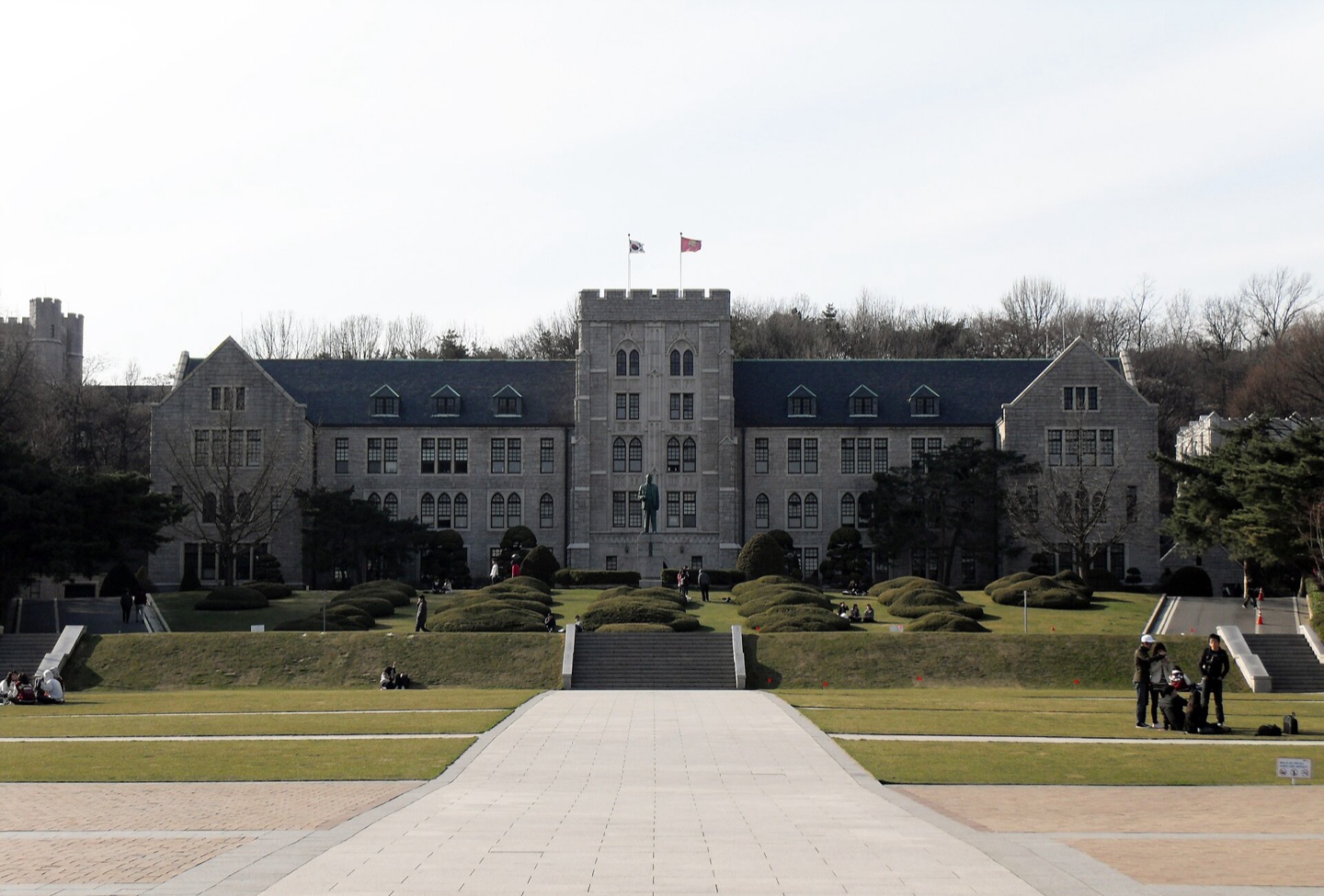 Ksiom, CC BY-SA 3.0, resized
Things Korean students all know that are new when you arrive.
SKY stands for Seoul National, Korea and Yonsei, the three universities in Korea that are hardest to get into. KU describes itself as one of the country's oldest and largest universities.
Every autumn KU plays Yonsei at football, baseball, basketball, ice hockey and rugby in Jamsil. The games go back more than 80 years, and Yonsei students call them Yon-Ko-Jeon. Exchange students go with their KUBA buddy group.
KU's festival runs for a week around 5 May, the school's anniversary, with a street festival on Chamsari Street. It ends with the Ipselenti cheering night. You'll see it if you come in spring.
Every autumn KU's international students share their countries' culture and food at a festival. If you come in autumn, you can take part.
KU's colour is crimson and its animal is the tiger. A stone tiger has stood on the east hill of the Anam campus since 1963.
No cars drive through the campus. Under the lawn of the Central Plaza is an underground plaza with reading rooms and other facilities. The Main Hall and the Main Library, built with money raised across the country, are national historic sites.
From KU's official English pages (about KU, student life, symbols and history) and the GSC buddy page, checked on 25 October 2026. The line about SKY is A-CHA's own explanation.
Buddies, language exchange and clubs for international students at KU.
A club where Korean and international students meet. KU's own pages don't link this account, so we can't confirm who runs it.
KU's buddy programme, run by KU students. Exchange and visiting students join automatically, and a KU buddy emails you before the semester and helps you pick courses. At orientation in February and August (two to three days, you're expected to come) you're put in a group of exchange students and KUBA buddies, and you go through the semester's events with that group: Field Day in April and September, a field trip near Seoul, cheering orientation, Ipselenti on the last night of the May festival and the Korea University and Yonsei games in September. The school says the point is friendships that last. Photos and notices go up on @koreauniv_kuba_official, though KU's own pages don't link that account, so we can't confirm who runs it.
KU's main Instagram.
@koreauniv.officialInstagram accounts checked on 2 October 2026.
Country chats are for everyone from that country studying anywhere in Korea, not only at KU.
Going with friends? Make a group in A-CHA for your own crew and send them the invite link.
Open to every international student in Korea, not only at KU.
 Flash meetups. Anyone can start or join a short meetup in the app, like dinner tonight or a hike on Saturday.
Exchange students study and live at Anam, the main campus in Seoul. Courses at the Sejong campus are closed to them, and Sejong University is a different school.
서울특별시 성북구 안암로 145
145 Anam-ro, Seongbuk-gu, Seoul 02841
Also on Kakao Map and Google Maps. Naver and Kakao work best in Korea.
Cheonggyecheon, Gwangjang Market and old palaces, plus every place to eat near campus.
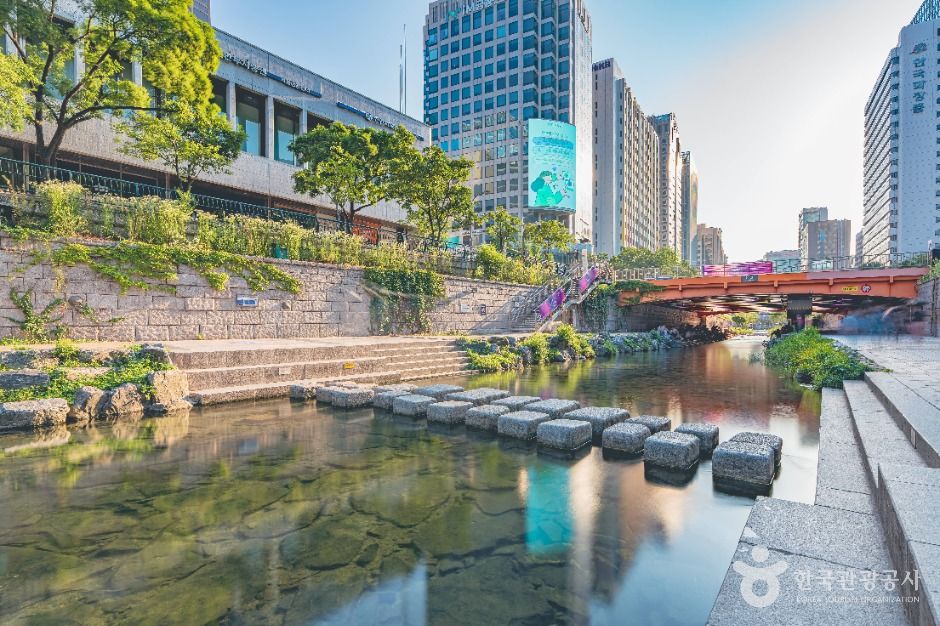
The stream is lit every night. In winter the lantern festival overlaps with the Bamdokkaebi Night Market's Cheonggyecheon site on Friday, Saturday and Sunday.

The LED rose garden and Seoul Light only run in season, so check the schedule first.

The birthplace of jeukseok tteokbokki (즉석떡볶이), cooked at your table. Many places take orders from two portions up.
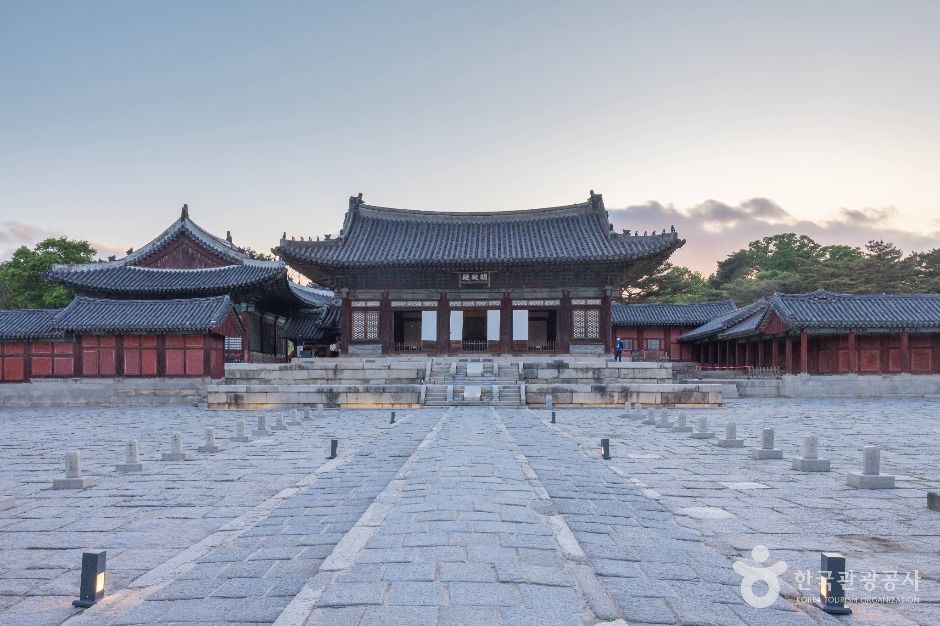
Along with Deoksugung it stays open until 21:00, last admission 20:00. Those are the two palaces you can walk after dark. It closes on Mondays, the opposite of Gyeongbokgung.

The food alley runs 09:00-23:00 every day. Only the regular shops close on Sundays.
For Spring 2027. The emails from the school come first. Use this list to check nothing is missing. Ticks stay in this browser only.
Not an official KU page. Dates and rules change. Check the details on KU's official site before you apply or book anything. KU Global Service Center ↗ Checked on 19 October 2026
Online only, 1 to 31 October for spring 2027, with a US$50 fee that isn't refunded. Review takes 6 to 8 weeks, then you send proof of funds, and admission papers follow in 1 to 2 weeks.
A GPA of 2.5 out of 4.0. Undergraduates need two semesters done before applying, graduate and transfer students one. You need to be able to take classes in Korean or English, and no test score is asked for.
The Global KU Scholarship is for exchange students nominated by a partner university. Amounts and deadlines are on the GSC scholarship page.
Scholarships ↗An English transcript, a GPA conversion form, an essay, your passport, a health certificate (for spring, from a check between August and October), a pledge and a photo. Students from outside the OECD, counted by citizenship, post an apostilled certificate of enrolment by 15 November for spring. If your university's country isn't in the Apostille Convention, a confirmation from a Korean embassy or consulate there works, and universities in China send a CHSI certificate. Prepare your bank statement only after KU's acceptance email.
Exchange students need a D-2-6 visa. Apply at a Korean embassy or consulate with your certificate of admission, which comes from December for spring. Don't enter Korea on a K-ETA.
Send proof of travel insurance by 31 January for spring. The certificate must be in English and show your name, with health cover in Korea for the whole semester. After your residence card registration you join National Health Insurance, about ₩79,000 a month in 2026.
Proof of two MMR shots and a negative TB test taken within 90 days of moving in, so from 1 January for spring.
Orientation for exchange and visiting students is on 26 February 2027, the same day as the entrance ceremony, and classes start on 2 March. Both dates are tentative.
Go to your local immigration office. Don't travel to other countries before the card is issued. A single-entry visa is used up when you leave, and you may need a new one to come back.
You need the card to open a phone contract in your own name, open a bank account and sign up for most Korean apps.
Booking the immigration visit. Papers, fee and HiKorea screens step by step. Read the guide
A place isn't guaranteed. Apply on dorm.korea.ac.kr, first come first served, in December and January for spring.
Korea University's autumn 2026 exchange dorm notice and the dormitory website. Checked on 19 October 2026.
Korean universities point exchange students to these. They're private companies with no tie to any school. Don't send a deposit before you've seen the contract.
Finding a room. Browse rooms near campus in the app. If nothing fits, tell us what you need and we'll ask local agents for you, free.
Spring 2027 registration is 15 to 19 February, after a preliminary round on 2 to 4 February.
You save courses to a wish list, then register, change and withdraw.
Each class sets aside about 25% of its seats for exchange students, and if the exchange students who list a course stay within that share, they're registered automatically.
Graduate courses skip the wish list and withdrawal steps, and nothing changes after the withdrawal period.
Business, media, international studies and psychology fill fastest.
₩1,713,600 to ₩2,380,000
A semester, autumn 2026 rates
The rules don't set one.
You can't move in between 22:00 and 9:00.
A mattress and mattress cover only.
Bring your own pillow, blanket and mattress pad.
Exchange students need a D-2-6 visa.
Apply at a Korean embassy or consulate with your certificate of admission, which comes from December for spring.
Don't enter Korea on a K-ETA.
KUBA
KU's buddy programme, run by KU students.
Exchange and visiting students join automatically, and a KU buddy emails you before the semester and helps you pick courses.
At orientation in February and August (two to three days, you're expected to come) you're put in a group of exchange students and KUBA buddies, and you go through the semester's events with that group: Field Day in April and September, a field trip near Seoul, cheering orientation, Ipselenti on the last night of the May festival and the Korea University and Yonsei games in September.
The school says the point is friendships that last.
Photos and notices go up on @koreauniv_kuba_official, though KU's own pages don't link that account, so we can't confirm who runs it.
Yes.
KU has a room on A-CHA where exchange students meet, and you can join before you land.
Orientation for exchange and visiting students is on 26 February 2027, the same day as the entrance ceremony, and classes start on 2 March.
Both dates are tentative.
Register within 90 days of arriving.
Go to your local immigration office.
Don't travel to other countries before the card is issued.
A single-entry visa is used up when you leave, and you may need a new one to come back.
Send proof of travel insurance by 31 January for spring.
The certificate must be in English and show your name, with health cover in Korea for the whole semester.
After your residence card registration you join National Health Insurance, about ₩79,000 a month in 2026.
Up to 19 credits for undergraduates and 12 for graduate students.
Undergraduates can't take graduate courses.
Online only, 1 to 31 October for spring 2027, with a US$50 fee that isn't refunded.
Review takes 6 to 8 weeks, then you send proof of funds, and admission papers follow in 1 to 2 weeks.
Where to ask. GSC: Part-time work needs a permit from immigration first and a GPA of 2.0 or more last semester. Ask the GSC at studyabroad@korea.ac.kr. Open ↗
 Netherlands
 Germany
 France
 Spain
 Italy
 Sweden
 Finland
 Poland