It began as a nursery teachers' school
The earliest entry in Kyonggi's history is 1947, when the Jo Yang Nursery Teachers' School was set up in Yeonji-dong, Jongno-gu, Seoul. It became a junior college in 1954 and a four-year university in 1963.

Kyonggi · Suwon
A university that began in Seoul in 1947 as a nursery teachers' school and now has campuses in Suwon and Seoul. Exchange students live and study at the Suwon campus.
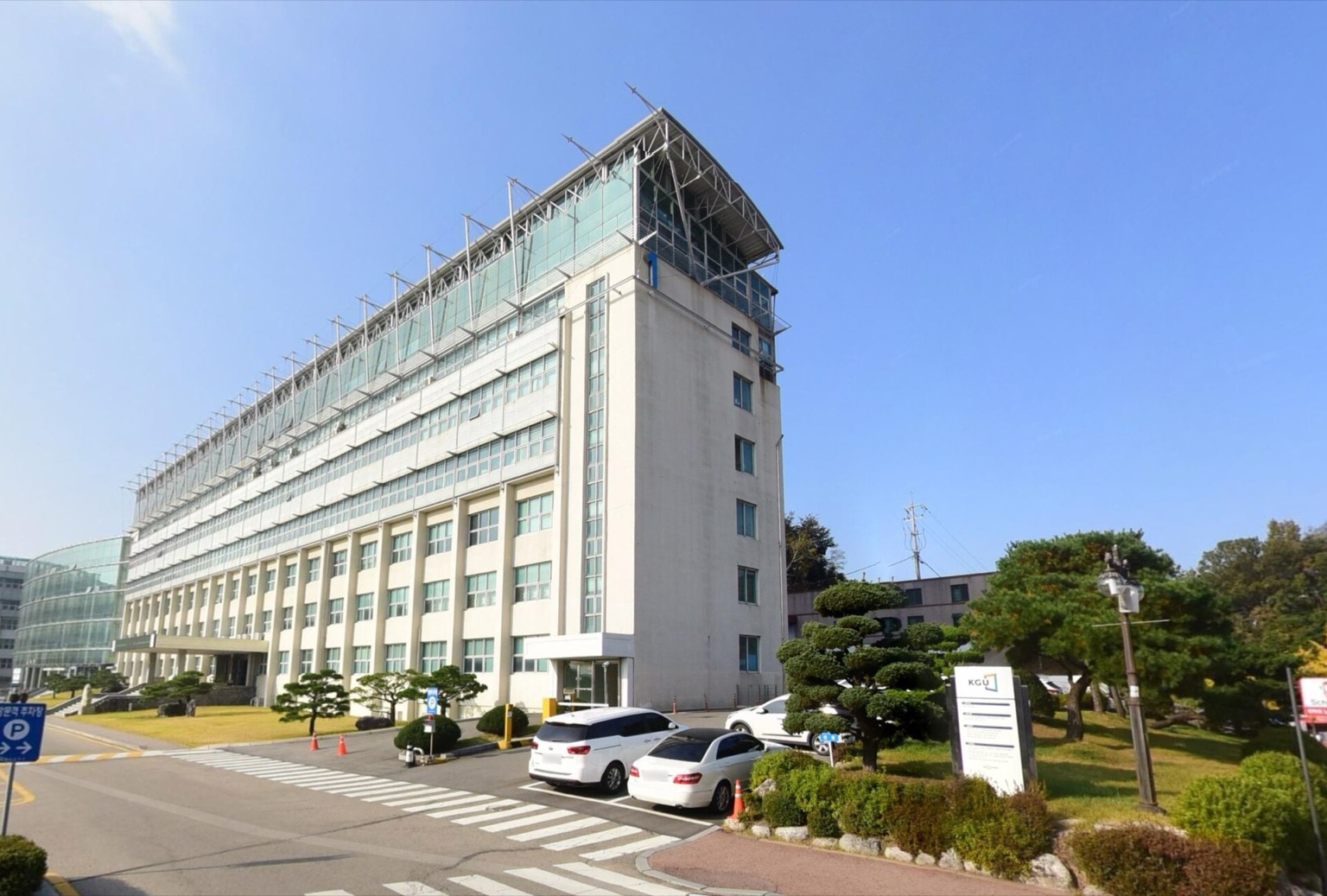 경기대예술, CC BY-SA 4.0
Things Korean students all know that are new when you arrive.
The earliest entry in Kyonggi's history is 1947, when the Jo Yang Nursery Teachers' School was set up in Yeonji-dong, Jongno-gu, Seoul. It became a junior college in 1954 and a four-year university in 1963.
The school got permission in 1979 to move to Yongin, and in 1982 its headquarters moved to Suwon. The Seoul campus is in Seodaemun-gu.
The mascot is Giryong-i, a baby turtle. Kyonggi says the turtle stands for loyalty, trust, long life, wisdom and perseverance, and its home in the open sea matches the school's aim of reaching out to the wider world.
The school tree is the Korean juniper, which keeps its green needles in any climate. The school flower is the white magnolia, which blooms early in spring.
From Kyonggi's official pages: the International Office's English history, and the Korean pages on school symbols, the logo and the mascot, checked on 26 October 2026.
The International Office runs a buddy programme and a language exchange for exchange students.
Korean students who signed up to be your friend. They help with course registration, orientation and campus tours, and plan culture trips and outings.
The International Office's Instagram, linked from its website.
@international_kguInstagram accounts checked on 21 October 2026.
Country chats are for everyone from that country studying anywhere in Korea, not only at Kyonggi.
Going with friends? Make a group in A-CHA for your own crew and send them the invite link.
Open to every international student in Korea, not only at Kyonggi.
 Flash meetups. Anyone can start or join a short meetup in the app, like dinner tonight or a hike on Saturday.
Exchange students live and study at the Suwon campus. Kyonggi also has a campus in Seoul, but it has no dorm or Korean courses, and most English classes are in Suwon.
경기도 수원시 영통구 광교산로 154-42 경기대학교
154-42 Gwanggyosan-ro, Yeongtong-gu, Suwon-si, Gyeonggi-do 16227
Also on Kakao Map and Google Maps. Naver and Kakao work best in Korea.
Suwon Hwaseong Fortress and Paldalmun Market within 4 km of campus.

The point where the wall meets the pond. Short and scenic rather than a full sightseeing stop.
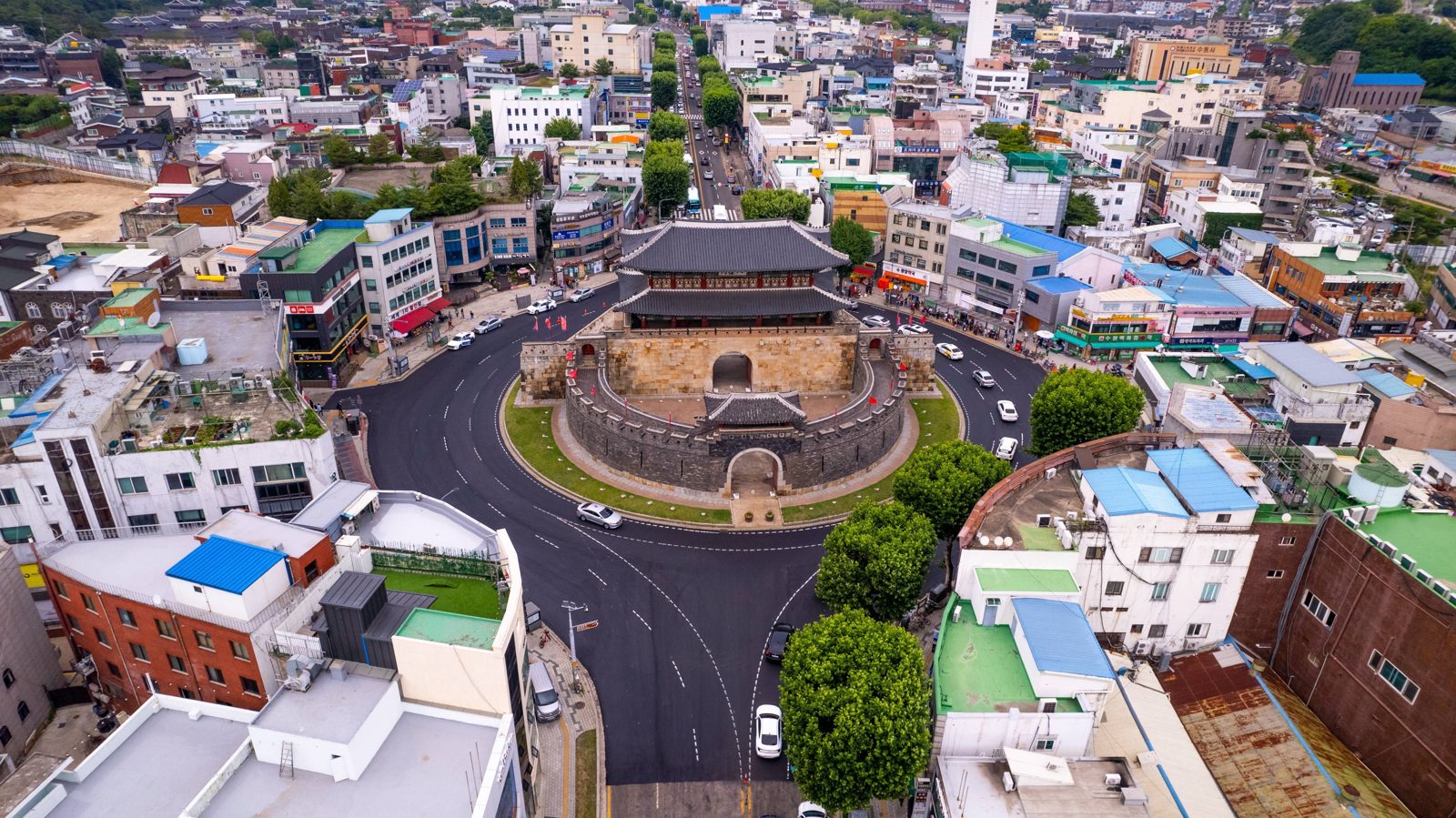
You walk the fortress wall and read a late-Joseon city from it - the clearest history day trip out of Seoul.

Indoor and outdoor palace grounds in the middle of the wall walk, so the route does not have to break.
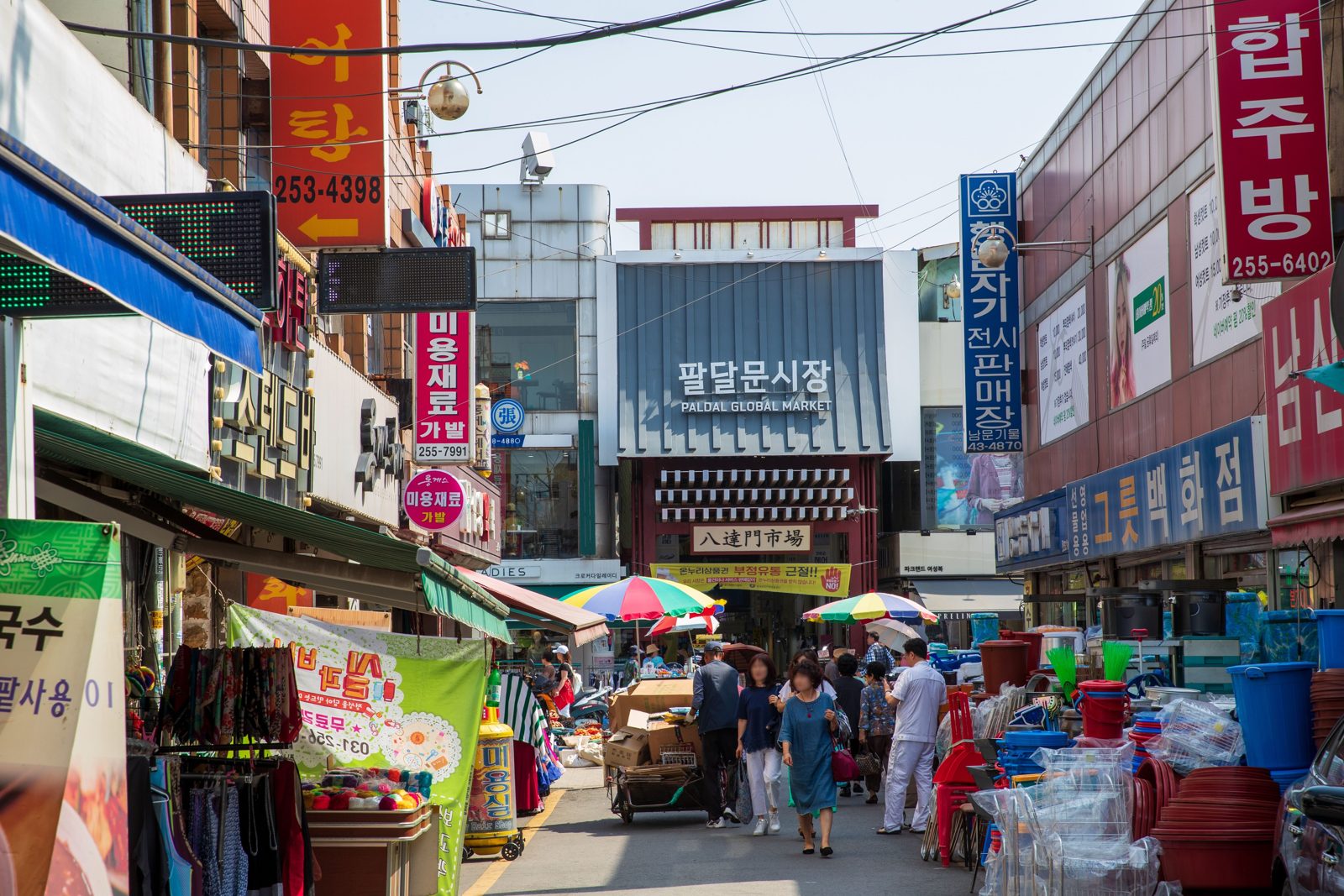
Market food and everyday Suwon in one place, for when picking between tourist restaurants gets tiring.

An ordinary evening walk and picnic spot in Suwon - the kind of place you use if you live here.
For Spring 2027. The emails from the school come first. Use this list to check nothing is missing. Ticks stay in this browser only.
Not an official Kyonggi page. Dates and rules change. Check the details on Kyonggi's official site before you apply or book anything. Kyonggi incoming programmes ↗ Checked on 21 October 2026
Your home university nominates you by the first Friday of November. Kyonggi then emails you a link, and you apply online from the third Monday of October to the last Friday of November. Results come on the first Friday of December.
Students from partner universities, nominated by their home university. There's no nationality limit. You pay tuition at home, and everything else yourself. Without an agreement you can still come as a visiting student and pay Kyonggi's tuition.
For classes in English you need enough English to follow them. Kyonggi sets no test score. For classes in Korean you need TOPIK level 3, or a Korean school certificate or a professor's letter instead.
An enrolment certificate and a bank statement in English, your transcript, a recommendation letter, your home university's code of conduct, the dorm form or an off-campus form, a passport photo and a copy of your passport. What you send depends on your nationality, and Kyonggi emails the details.
Exchange students get a D-2-6 visa, visiting students D-2-8. Kyonggi sends the visa papers between early December and mid-January, and you apply at the Korean embassy at home straight away. You can't get it inside Korea, so never come on a tourist entry.
Kyonggi wants private insurance (student or travel) for your whole stay, and a copy of the certificate by the end of January. It no longer sells insurance itself. You also join National Health Insurance once you register for your card, about ₩79,000 a month in 2026.
Your buddy is introduced in January. Dorm move-in is in the last week of February on the days Kyonggi sets, with no early check-in. Orientation and a campus tour are compulsory for every new student.
Everything except the dorm is paid in cash in the first week of March. You can't pay by card or send money from abroad.
Booking the immigration visit. Papers, fee and HiKorea screens step by step. Read the guide
Exchange students can live in Dream Tower on the Suwon campus, or find a room off campus on their own.
Kyonggi's housing pages, its dorm Q&A and its School Life page. Checked on 21 October 2026.
Korean universities point exchange students to these. They're private companies with no tie to any school. Don't send a deposit before you've seen the contract.
Finding a room. Browse rooms near campus in the app. If nothing fits, tell us what you need and we'll ask local agents for you, free.
₩1,600,000
A semester in a twin room, plus a ₩100,000 deposit you get back
The doors close at 2:00 and open again at 5:00.
Kyonggi won't help you find a room or sign a contract.
Before you book, check the landlord can give you a lease with your name, or a copy of their ID with proof they own the place.
You need it for your residence card.
Exchange students get a D-2-6 visa, visiting students D-2-8.
Kyonggi sends the visa papers between early December and mid-January, and you apply at the Korean embassy at home straight away.
You can't get it inside Korea, so never come on a tourist entry.
Global K-Buddy
Korean students who signed up to be your friend.
They help with course registration, orientation and campus tours, and plan culture trips and outings.
Yes.
Kyonggi has a room on A-CHA where exchange students meet, and you can join before you land.
Your buddy is introduced in January.
Dorm move-in is in the last week of February on the days Kyonggi sets, with no early check-in.
Orientation and a campus tour are compulsory for every new student.
Kyonggi wants private insurance (student or travel) for your whole stay, and a copy of the certificate by the end of January.
It no longer sells insurance itself.
You also join National Health Insurance once you register for your card, about ₩79,000 a month in 2026.
11 to 20 credits.
Most exchange students take 12, about four classes.
One credit is 15 hours, and most classes are 3 credits.
Your home university nominates you by the first Friday of November.
Kyonggi then emails you a link, and you apply online from the third Monday of October to the last Friday of November.
Results come on the first Friday of December.
 Netherlands
 Germany
 France
 Spain
 Italy
 Sweden
 Finland
 Poland