Built on a local wish
DGIST says it was founded in 2004 under the long-standing aspirations of the local community. It was registered on 7 September 2004, and the Hyeonpung site was decided on 28 March 2005.

DGIST · Daegu
DGIST is a science and technology institute in Daegu, founded in 2004. It has one campus, in Hyeonpung-eup, Dalseong-gun, where exchange students study and live.
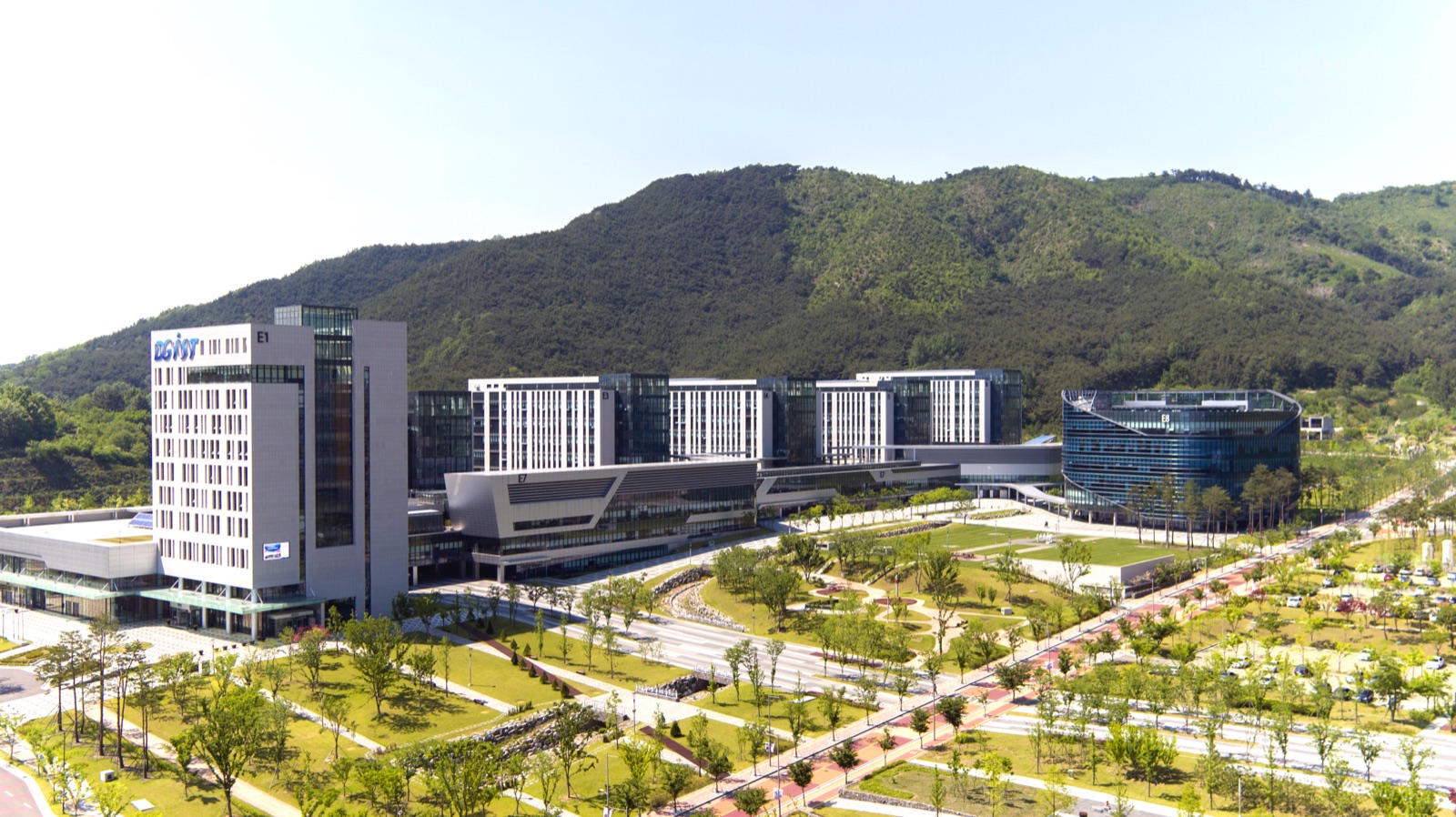 Irtofdgist, CC BY-SA 4.0, resized
Things Korean students all know that are new when you arrive.
DGIST says it was founded in 2004 under the long-standing aspirations of the local community. It was registered on 7 September 2004, and the Hyeonpung site was decided on 28 March 2005.
DGIST began as a research institute. The graduate school opened in 2011 and the undergraduate school in 2014, with the first matriculation on 3 March 2014.
The symbol is a Möbius strip in a cyan that recalls human DNA. DGIST says it stands for the endless possibilities of R&D.
DGIST's educational philosophy has four Cs: Creativity, Challenge, Collaboration and Care.
From DGIST's official English pages (greetings, history, at a glance, vision and symbol), checked on 26 October 2026.
In your first week the International Affairs Team runs an orientation and campus tour in the Global Lounge, E7 room 261.
Every incoming exchange student gets a DGIST student buddy to help with campus life.
The DGIST International Student Association, a student group working with the International Affairs Team. They run picnics, trips, dinners, short talks and a Korean language exchange.
@dgist_disaThe team's account for cultural courses and events for international members, named in the exchange fact sheet.
@dgist_internationalInstagram accounts checked on 21 October 2026.
Country chats are for everyone from that country studying anywhere in Korea, not only at DGIST.
Going with friends? Make a group in A-CHA for your own crew and send them the invite link.
Open to every international student in Korea, not only at DGIST.
 Flash meetups. Anyone can start or join a short meetup in the app, like dinner tonight or a hike on Saturday.
DGIST has one campus, in Hyeonpung-eup, Dalseong-gun, in the south of Daegu.
대구광역시 달성군 현풍읍 테크노중앙대로 333
333 Techno jungang-daero, Hyeonpung-eup, Dalseong-gun, Daegu 42988
Also on Kakao Map and Google Maps. Naver and Kakao work best in Korea.
Every place to eat near campus.
For Spring 2027. The emails from the school come first. Use this list to check nothing is missing. Ticks stay in this browser only.
Not an official DGIST page. Dates and rules change. Check the details on DGIST's official site before you apply or book anything. DGIST student exchange programme ↗ Checked on 21 October 2026
Your home coordinator emails DGIST the list of nominated students by mid-September for spring or mid-March for autumn.
DGIST then contacts you. By mid-October for spring or mid-April for autumn, send the application form, a CV, your transcript in English and proof of English, either a test report or a letter from a professor at home.
DGIST strongly recommends CEFR B2, IELTS 6.0 or TOEFL iBT 80 or above.
Each department decides. Results reach you and your home university by the end of November for spring or the end of May for autumn. Then you fill in the registration form with your details, passport, photo and dorm preferences, which DGIST needs for your Certificate of Admission.
You need a D-2-6 exchange student visa. DGIST sends the Certificate of Admission, an invitation letter and its business registration in December for spring or June for autumn. Apply no more than 90 days before you fly.
By mid-January for spring or mid-July for autumn, send proof of funds, a chest X-ray TB result and proof of measles vaccination in English, your insurance certificate and your flight booking. DGIST puts living costs for a semester at about US$4,000.
Bring medical insurance that covers your whole stay and send DGIST the certificate with the coverage period and amount.
Your buddy uses KakaoTalk to reach you, so set up an account before you come.
At the start of the semester the International Affairs Team organises a group application, with the time and transport arranged.
Booking the immigration visit. Papers, fee and HiKorea screens step by step. Read the guide
Course offerings are final by late January for spring.
You set up a student portal account in early February, and the Educational Affairs Team sends the steps.
Every graduate school course is taught in English.
Graduate courses are numbered 500 to 900, and you can pick courses from other departments.
About ₩5,670 a day
Shared double room, 2025 rates, plus ₩2,000 a day for utilities
You need a D-2-6 exchange student visa.
DGIST sends the Certificate of Admission, an invitation letter and its business registration in December for spring or June for autumn.
Apply no more than 90 days before you fly.
DGIST Buddy
Every incoming exchange student gets a DGIST student buddy to help with campus life.
Yes.
DGIST has a room on A-CHA where exchange students meet, and you can join before you land.
Within 90 days of arriving.
Bring a photo from home or have one taken after you arrive.
Once you have a residence card number you're enrolled in National Health Insurance automatically and pay monthly.
If your own insurance covers you, the International Affairs Team helps you apply to opt out.
12 to 15 credits is recommended, usually 4 or 5 courses.
To take more than 12, send the excess credit form signed by your department to edu_grad@dgist.ac.kr before registration.
DGIST then contacts you.
By mid-October for spring or mid-April for autumn, send the application form, a CV, your transcript in English and proof of English, either a test report or a letter from a professor at home.
 Netherlands
 Germany
 France
 Spain
 Italy
 Sweden
 Finland
 Poland